


Inflation outlook - Recap on the last quarter and next quarter outlook - September/ October
The Consumer Prices Index (CPI) rose by 3.1% in the 12 months to August 2026, up from 2.9% the previous month. The 12-month inflation rate for food and non-alcoholic beverages was 1.3% in August 2026, unchanged from July. The rate was last lower in September 2021, when it was 0.8%. The Retail Price Index (RPI) is now 3.4% vs 3.2% last month.
A key call out is that while food inflation is currently low, the ongoing war in Ukraine, Middle East conflict and El Nino impact are all adding pressure to the supply chain. The underlying cost pressure has not gone - it has been delayed with manufacturers hedging energy costs, and retailers resisting supplier increases. As a result, the 2026 energy and supply shock is now expected to land later and last longer, with the peak moving into mid-2027.
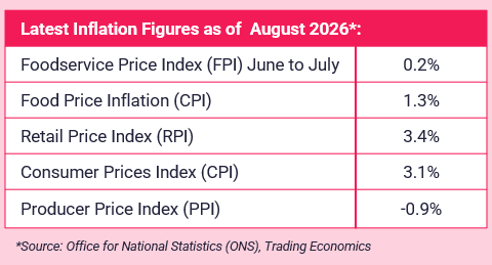
Category Updates
Fruit and Vegetables
Unprecedented summer temperatures and water restrictions across the UK and Europe have hit yield, size and quality. Salad crops, brassicas and mushrooms were worst affected, and the disrupted planting window means smaller crops into autumn. Expect a tight market and firm pricing through the season.
Root veg poses a risk this year to the El Nino and the impact this is having on yields. Most notably parsnips, potatoes, and carrots. Review Christmas menus for these items and look to switch for an alternative root veg. e.g. Swede, which has performed well, or support your volumes with frozen alternatives.
Fish and Seafood
Hake: Strong demand as operators move away from higher-priced cod and haddock; whitefish supply constraints should keep prices firm.
Monkfish: Steady pricing supported by strong UK and European demand, with stable availability through autumn.
Sea Bass: Favourable fishing conditions mean steady supply and only slight price movement expected.
Tilapia: The strongest value option in the category, reliable production makes it an effective substitute for cod and haddock.
Dairy
Egg and cheese markets stayed resilient over summer. Warmer weather reduced Avian Influenza cases and firm demand steadied the egg market, with eggs benefiting from the shift towards affordable protein. Cheese held up well, led by continental lines in retail. Prolonged heatwaves did, however, tighten milk supply and add pressure to farmgate pricing, though butter and cream remained stable.
Grocery - Commodities
Our category strategy continues to deliver value through contracting aligned to sub-category seasonality, cost-transparent supplier arrangements, and the breadth of our supplier network to secure the best commercial option. Pricing across the category remains mixed directionally for the next quarter, and current indicators point to renewed inflationary pressure into 2027 as high energy costs and weather disruption take effect across the supply base.
Bakery
The UK bakery commodity outlook has been broadly stable over the last quarter however we are seeing some key commodities become exposed to weather events, geopolitical disruption and currency movements, with wheat & flour seeing some volatility.
Meat
Beef: UK beef supply remains tight, with lower cattle numbers restricting availability. AHDB forecasts production to fall 1.3% in 2026, maintaining pressure on cattle prices, and although the decline should ease into 2027 availability remains a concern. Pressure is greatest on value lines, mince, burgers, trim and diced, as high premium-cut prices push demand towards lower-cost forequarter cuts. Outlook: Inflationary risk remains elevated, particularly where specifications require UK sourced or tightly defined raw material.
Lamb: Lamb remains one of the most inflationary areas. AHDB forecasts UK lamb production to fall by around 3% in 2026, with the national flock continuing to contract, so tight supply and elevated pricing are expected to persist through the season. Where menus allow flexibility, reviewing cut specification or country of origin offers the most effective route to managing cost. Outlook: Pricing is expected to remain elevated, with availability, specification and country-of-origin requirements likely to determine the level of pricing and availability pressure.
Pork: Pork is the clearest value opportunity in the protein range this quarter. UK production has run ahead of forecast at around 5% above 2025, and healthy European availability is supporting stable pricing — though demand is rising as consumers move across from beef and lamb. Building pork into menu cycles now is the most direct way to offset inflation elsewhere. Outlook: There is an opportunity to maintain competitive pricing across core pork lines and potentially offset inflation elsewhere in the protein basket.
Chicken: Chicken remains a dependable value protein, with cost still competitive against red meat. The UK Avian Influenza position improved significantly during 2026, with protection zone measures lifted in June, but the winter season brings renewed risk. Where chicken carries significant menu volume, it is worth confirming specification flexibility ahead of winter in case availability tightens. Outlook: Broadly stable, with heightened winter risk. Sharp inflation is possible rather than expected; rising feed costs are an added pressure.
Turkey: Turkey demand was significantly lower last year, with total demand down 12% versus the previous year and retail down 5.4%. We have locked in our core frozen turkey price ahead of peak Christmas demand pricing. Flock availability is already falling as farmers move from turkey into chicken because of the risk of Avian Influenza wiping out flocks. Turkey flocks take longer to recover because of their longer growth times. Outlook: Autumn and winter bring a risk of increased Avian Influenza outbreaks, which can affect fresh bird prices. If last year’s lower demand trend continues, it may help soften the impact.
Key Market Movers
| Category | Percentage change over the last 12 months |
| Milk, cheese, and eggs | -0.2% |
| Oils and fats | -2.8% |
| Breads and cereals | 1.3% |
| Vegetables | 2.1% |
| Meat | 0.1% |
| Sugar, jam, syrups, chocolate and confectionery | 0.6% |
| Fish | 6.6% |
| Fruit | 2.2% |
Recap on the last quarter
Fruit and veg
The last quarter remained challenging across the UK and Europe due to heat, drought and water restrictions. Quality, crop size and yields were affected, creating availability issues, concessions and increased pest pressure.
Salad Crops (Tomatoes, Cucumbers & Peppers)
Tomatoes: Heat reduced quality and shelf life, particularly on beef and plum varieties. Isle of Wight production improved later in the season but did not fully recover. Growers harvested fruit at earlier colour stages to improve durability and maintain supply.
Peppers: Heat-driven supply pressures continued. Spanish crops saw quality issues, while Dutch growers harvested immature fruit to extend shelf life, affecting flavour and quality.
Cucumbers: Heat impacted yields, resulting in limited volumes and unstable supply. Tight availability is expected until the new season begins.
Brassicas: Broccoli, cauliflower and Tenderstem remained under pressure due to heat-related availability issues. Red and white cabbage supplies also tightened as stored crops reached the end of the season, resulting in ongoing concessions linked to quality and crop size.
Mushrooms: Higher temperatures affected compost cooling, delaying harvests and reducing yields and mushroom size, with larger lines most impacted.
Fish and seafood
The seafood sector faced continued summer challenges due to reduced fishing opportunities across key species and sustained domestic and export demand, keeping prices firm across the market.
Trout: Prices remained stable, supported by consistent production and dependable supply. As salmon prices continued to rise year-on-year, trout remained an attractive value alternative.
Salmon: Pricing stayed elevated throughout the period, driven by ongoing demand and tighter market conditions.
Sea Bass & Gilthead Bream: Both species delivered the expected supply and price stability seen earlier in the year. Consistent production made them among the most reliable seafood options during the quarter.
Grocery
Contracts remain stable from prior bookings as the grocery commodities category is primarily adjusted annually with the exception of a few cases where we would see bi-annual price adjustments.
Dairy
June: Declining Avian Influenza cases, supported by sustained warm weather, helped stabilise egg supply as consumer demand for affordable protein increased. The UK cheese market also entered the summer positively, supported by strong export demand.
July: Cheese demand strengthened further, particularly across continental and snacking varieties. Egg demand remained resilient as Avian Influenza pressures eased, while heatwaves began impacting milk production and raising concerns around future cheese supply.
August: Milk supplies tightened as weather pressures persisted. Processors faced increasing pressure around farmgate milk pricing, which has remained exceptionally low throughout the year. Meanwhile, wholesale butter and cream markets stayed firm.
Meat
Beef: Tight cattle availability kept costs elevated throughout the summer. The greatest pressure was seen on mince, burgers, trim and diced products, where strong forequarter demand increased competition for supply. With premium cuts difficult to justify at current prices, demand continued to favour value-led beef.
Lamb: Prices remained historically high due to constrained UK and European supply. Imports improved availability slightly but failed to ease underlying market pressure. A reduced breeding flock continues to keep supply tight.
Chicken: Availability improved as the UK Avian Influenza position stabilised. However, ongoing continental challenges, a weaker pound against the euro and continued feed, energy and production cost pressures continued to influence pricing.
Pork: The most stable of the major proteins during the quarter. Higher domestic production, increased slaughter numbers and heavier carcass weights supported strong availability and relatively stable pricing.
Next Quarter Outlook
Fish and seafood
Seafood markets are expected to increase steadily in price through autumn, although farmed species should continue to offer better pricing than wild-caught alternatives. Supply on whitefish species is expected to remain tight, which will support this increase in pricing across the sector.
Salmon: Demand is expected to increase as the market enters the seasonal build-up for Christmas. Prices are likely to remain above previous years, barring stronger-than-expected harvest volumes.
Mackerel: This fish remains at risk of quota reductions and as a result, supply is expected to remain constrained compared with previous years. Availability will tighten as the year progresses.
White Fish: We continue to see prices rise on white fish, notably Haddock and now Pollock, as consumers look for more affordable alternatives to Cod.
Grocery - commodities
Several key contracts begin this quarter, including rapeseed oil, sugar, tomatoes, and canned fruits. We will be seeing a price increase on rapeseed oil due to higher energy markets, greater biofuel demand shifting demand into vegetable oil markets, and severe drought has created logistic delays. Sugar contract will see moderate deflation due to stronger global production compared to prior periods. Tomatoes will see near flat pricing due to continued strong partnership with our incumbent supplier. Finally, canned fruits are overall seeing deflation due to strong supply and favourable planting season.
Dairy
Within the last week, we have seen a sharp increase of farmgate milk. This is a result of the recent hot weather and drought, that has tightened domestic milk supplies. The weather has placed pressure on dairy farmers, with severely restricted grass growth. This has diminished pasture quality, and some farmers have reported 18.5m litres of milk yields wiped since the start of summer. The consequences of this is sharp inflation, that we are expecting this to impact us severely in the later months of this year.
Bakery
Wheat & Flour: We have benefitted from a relatively stable market this year, supported by favourable crop and improved global supply from 2025, although weather and geopolitical risks are beginning to create some uncertainty for the coming months. UK wheat has begun to see some inflation over the last few months due to drought and harvests being brought forward.
Oils & Fats: Vegetable oils remain a watchpoint, this sector remains vulnerable to shifts in global demand, biofuel policies and weather conditions. Whilst we are not anticipating sharp inflation, oils are likely to remain a source of underlying cost pressure through the quarter.
Cocoa: The cocoa market continues to recover from the unprecedented supply shortages that drove record pricing in 2024 and 2025. Improved production forecasts and expectations of market surpluses have helped ease some inflationary pressure. However, cocoa prices remain materially above historical levels and continue to present a cost challenge for bakery products containing chocolate inclusions, coatings and fillings.
Meat
Beef:
Risk: Inflationary.
Beef supply is expected to remain tight through the remainder of 2026, with AHDB forecasting production down 1.3% for the full year. The key risk is continued pressure on cheaper beef cuts and core catering lines. Mince, burgers and trim are likely to remain particularly exposed as demand for value products competes for limited forequarter material.
Action: Continue to monitor supplier raw-material positions closely, challenge market movements and consider specification flexibility where possible, identify suitable product switches such beef into pork or chicken.
Lamb :
Risk: Inflationary.
Lamb supply is expected to remain constrained, with UK production forecast down approximately 3% in 2026. Imports will remain an important source of supply for foodservice, but global availability, exchange rates and European demand could influence landed costs. Country-of-origin and assurance requirements will also determine how much flexibility suppliers have.
Action: Maintain close supplier coverage and review alternative specifications/origins where customer requirements allow.
Chicken:
Risk: Stable / Inflationary risk.
The principal short-term risk is the return of seasonal AI outbreaks. The UK currently has no equivalent level of restriction seen during the previous outbreak period, but a significant winter outbreak could quickly tighten availability and increase supplier costs. The risk is particularly relevant for high-volume, tightly specified products where alternative supply is limited.
Action: Monitor AI developments closely and maintain alternative suppliers/specifications for critical lines.
Pork:
Risk: Stable.
Pork should remain one of the more favourable protein categories over the next quarter. UK production is currently running ahead of previous expectations and producer prices likely to remain stable, with a low-moderate risk of inflationary pressure. The main risks are changes in European supply, feed costs and demand. However, current fundamentals provide an opportunity to maintain competitive pricing on core foodservice lines.
Action: Use the current market position to introduce welfare improvements, such as Outdoor Bred Pork, into your business by consolidating volumes and identifying opportunities to offset inflation elsewhere in the protein basket.
Fruit and Veg
Supply pressure is expected to continue into September and the autumn months, with further concessions in place to support availability. We have seen a temperature drop in the UK and rain has begun, this will help the crop however recovery will be slow as very dry soils do not absorb sudden rainfall easily. In addition to this the variety in soil temperature (cold nights and warmer days), is affecting the crop, most crop need the temperature to be steady for ideal growing conditions. As we look forward, unpredictable weather patterns are challenging the crop further. We expect quality and availability to come at an even higher premium as we head into autumn.
Potatoes and Root Veg: The UK potato crop is facing significant challenges following prolonged periods of hot and dry weather. Yields are currently estimated to be around 30% below normal weight, with pressure on larger baking grades, particularly 40s and 50s. This is due to tuber sizing being severely affected by the lack of water during key growing periods, resulting in reduced availability of larger potatoes. Similar weather-related challenges are affecting major European growing regions, limiting the availability of imports that would normally help support the UK market. This is expected to continue from October through to July next year, with prices likely to remain elevated as domestic and European supplies tighten. This is also translatable to Root Veg. Carrots and Parsnips will be small as they are affected in a similar way to potatoes.
Brassicas: UK brassica supply remains under significant pressure following one of the hottest and driest growing seasons in recent years. Cauliflower availability continues to be particularly constrained, with volumes significantly below normal levels and we expect further supply challenges throughout the autumn. Recent rainfall and cooler temperatures have provided some relief and has also helped to alleviate some pest pressure. However, the impact of the prolonged adverse weather will continue to be felt as new crops require time to establish and reach maturity eg. 12-16 weeks for cauliflower. In addition to this quality remains variable across cauliflower, broccoli, and cabbage, with issues including over-maturity, cracking, bruising, irregular shape, and an increased risk of rot. Concessions are being utilised across cauliflower and red and white cabbage to help support availability. Overall, the market is expected to remain tight and volatile in the coming months.
Onions: The British onion crop is facing its most challenging season ever due to prolonged drought and extreme heat. Due to the heat the crops matured early with some finishing a month ahead of normal timeline. This has therefore reduced the bulb size and yield. Bulb size and yield is expected to be the biggest challenge this season, however there is also a concern about quality due to the early maturing.
Search