


Stay compliant with Simpler Recycling and plan ahead for further legislation
England’s first Simpler Recycling rules came into effect in early 2025, but that roll-out is only the beginning. As regulations evolve, businesses must separate materials accurately, demonstrate compliance, and stay prepared for further updates. With more changes coming, staying ahead is essential.
Stronger waste separation today protects your business against rising disposal costs, increased scrutiny and future regulatory changes. Regency supply partner, Nisbets has solutions for all waste management requirements - from effective and efficient waste separation containers to food waste management systems and carts and trolleys to help safely move cleaning and janitorial equipment around you site. You can take a look at the full Nisbets range here and below we have outlined the current legislations, along with details of what's still to come...
Simpler Recycling: new baseline for businesses
Simpler Recycling has been designed to standardise waste collection across England, ending long-standing inconsistencies between local authorities.
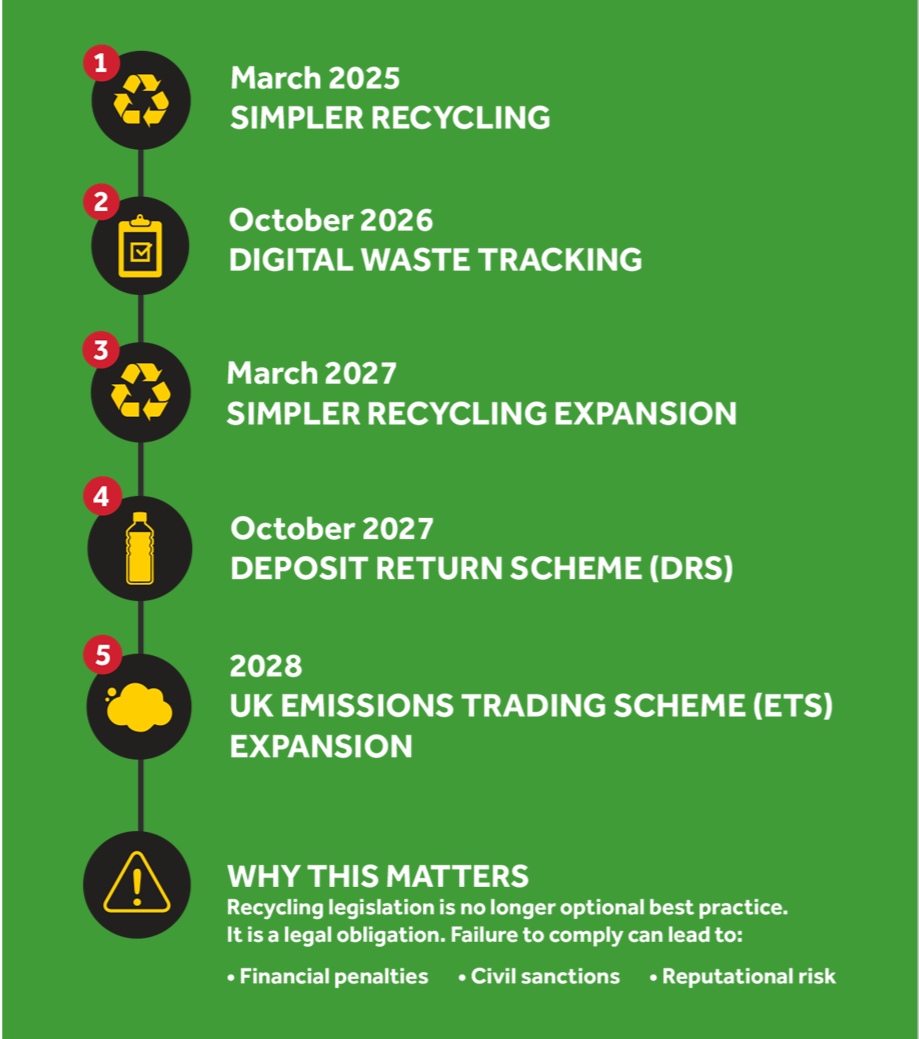
From March 2026, all businesses have been required to separate waste into four core streams: food (and garden) waste, paper and card, dry recyclables (such as plastic, glass and metal) and residual waste. This builds on earlier workplace rules introduced in March 2025, which already required businesses to separate recyclable and food waste.
October 2026: Digital Waste Tracking
From October 2026, businesses across the waste chain will be impacted by the introduction of mandatory digital waste tracking. This system will require organisations to record and share information about waste movements through a central digital platform. While the initial phase focuses on permitted waste facilities, the system is expected to expand quickly to include waste producers, carriers and brokers.
For businesses, this means:
- Replacing paper-based waste transfer notes with digital records
- Ensuring accurate data capture on waste types and volumes
- Greater visibility (and scrutiny) of waste handling practices
The shift will increase administrative requirements in the short term, but also reduce the risk of non-compliance and exposure to waste crime within supply chains.
March 2027: Expanded material requirements
From March 2027, the scope of recyclable materials will widen to include plastic films and flexible packaging.
This is particularly relevant for:
- Retailers and distribution centres
- Manufacturers using shrink wrap or flexible plastics
- Logistics and warehousing operations
Businesses will need to ensure these materials are segregated correctly and that their waste contractors are capable of collecting and processing them. This may require new waste streams, updated signage, and revised staff procedures.
October 2027: Deposit Return Scheme (DRS)
The Deposit Return Scheme, launching in October 2027, will directly affect businesses that sell drinks or handle beverage containers.
Key impacts include:
- Charging and managing deposits on in-scope drinks containers
- Hosting return points (for many retailers)
- Handling returned containers and associated logistics
For hospitality, retail and convenience sectors, this will introduce new operational processes, space requirements, and potential customer service considerations. However, it may also reduce on-site waste volumes for certain materials.
2028: UK Emissions Trading Scheme expansion
By 2028, the expansion of the UK Emissions Trading Scheme (ETS) is expected to bring energy-from-waste (EfW) facilities into scope.
Although this does not apply directly to most businesses, the indirect impact is significant. As the cost of incineration rises, waste disposal fees are likely to increase.
This creates a strong financial incentive for businesses to:
- Reduce residual waste
- Improve recycling rates
- Explore reuse and circular economy practices
Organisations that fail to adapt may face steadily increasing waste management costs.
Search